
The brief keeps moving
Numbers change late. Edit the booking and availability recalculates from the bookings themselves, so there is nothing to reconcile by hand afterwards.
If you own the furniture as well as the timeline, you are running two businesses. The second one is a warehouse, and warehouses do not run on a shared document.
STOCK THIS HANDLES
Everything is tracked as a bulk quantity rather than an asset record. Forty chairs are forty interchangeable units, which is how they are actually loaded, counted and lost.
WHAT GOES WRONG
Numbers change late. Edit the booking and availability recalculates from the bookings themselves, so there is nothing to reconcile by hand afterwards.
Roles are built from capabilities you choose. A driver sees what is going out, a coordinator sees the bookings, and only the office sees what the stock cost. Role changes land in an audit trail.
Both devices are first-class. The stock-count flow was designed for a phone held in one hand in a badly lit store room, with controls big enough to hit while wearing gloves.
HOW IT WORKS
The items you actually rent, in the quantities you actually have.
Availability follows the booking, including turnaround days.
Count it in and put damage, repairs and losses where they belong.
Every adjustment is auditable, so the next quote starts from a known figure.
BLOG
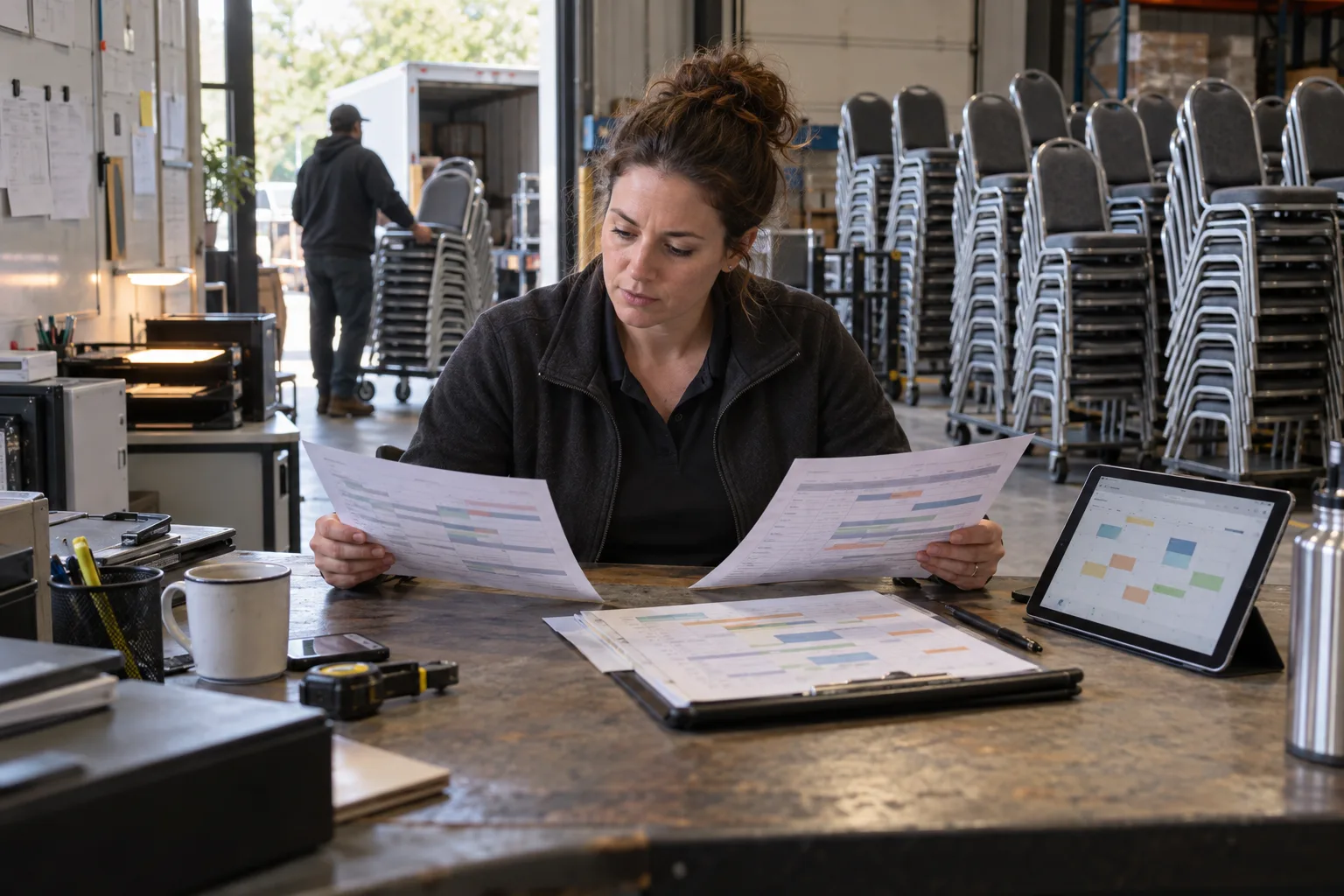
Double-booking is a record-keeping problem, not a discipline problem. Here is why availability spreadsheets fail, and the four rules that stop the same stock being promised twice.
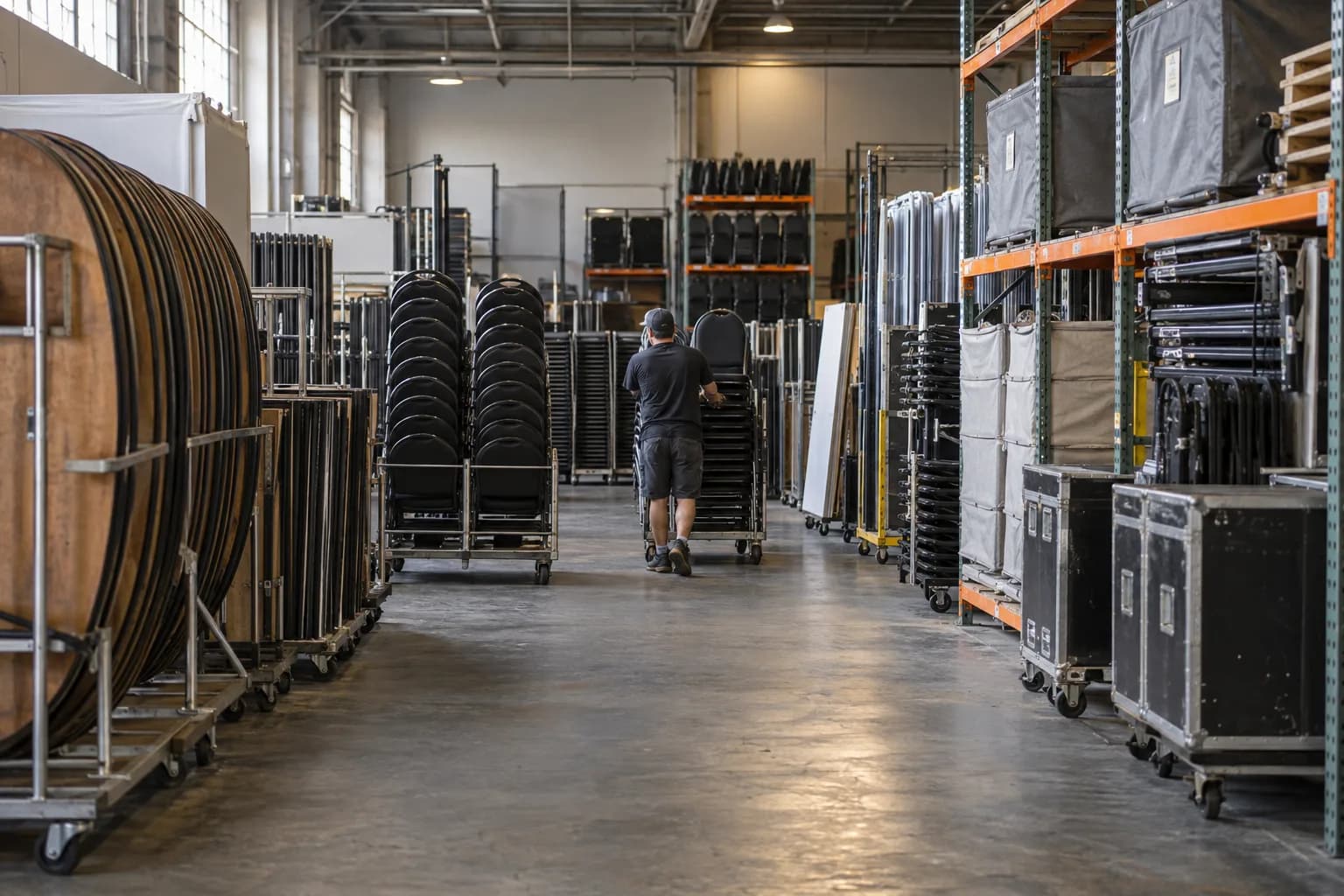
Zones, positions, staging areas and a counting routine that survives a busy weekend. A practical layout guide for event and party rental warehouses.
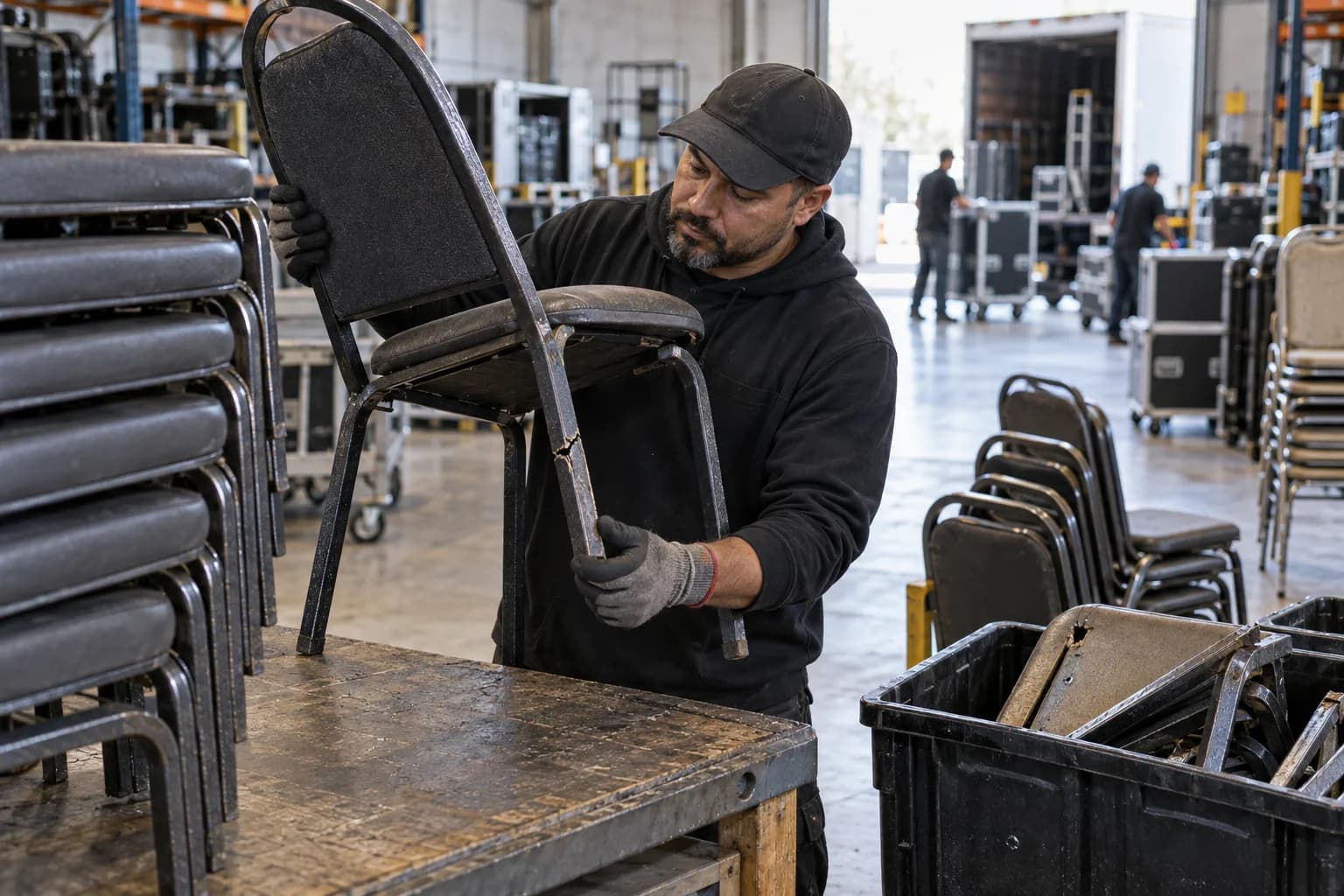
Damaged, in maintenance, missing and retired are four different things. Keeping them apart is what turns loss from a mystery into a number you can act on.
Event Managr starts with a 14-day free trial, and no card is required. Load what you rent and see what the record looks like when it is one record.