INVENTORY MANAGEMENT

Inventory that reflects the floor, not the spreadsheet

Rental inventory is not a shop's inventory. Nothing is sold, everything comes back, and the interesting question is never how many you own - it is how many you can actually promise to somebody on a given Saturday.

14-day free trial. No card required.

01

Bulk quantities, not serial numbers

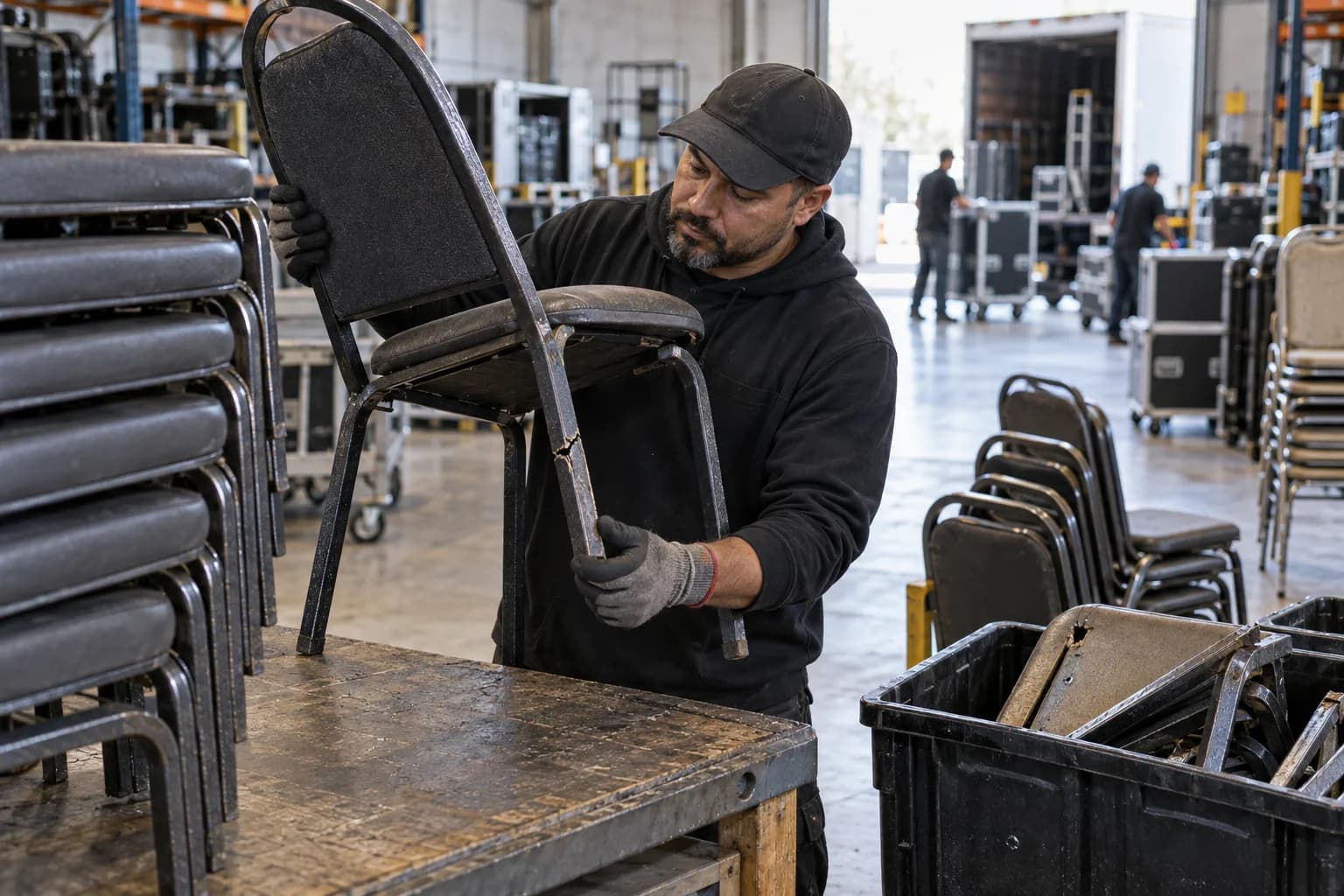
Forty chairs are forty interchangeable units, and forcing them into forty asset records makes the counting worse rather than better. Stock is tracked as counts, which is the way it is actually handled, moved and lost.

02

Seven figures that reconcile

Total owned, serviceable, reserved, at events, on shelf, in maintenance, missing. They add up, and they are derived from the same records rather than typed in separately, so two screens cannot disagree about the same item.

03

Storage zones and shelf positions

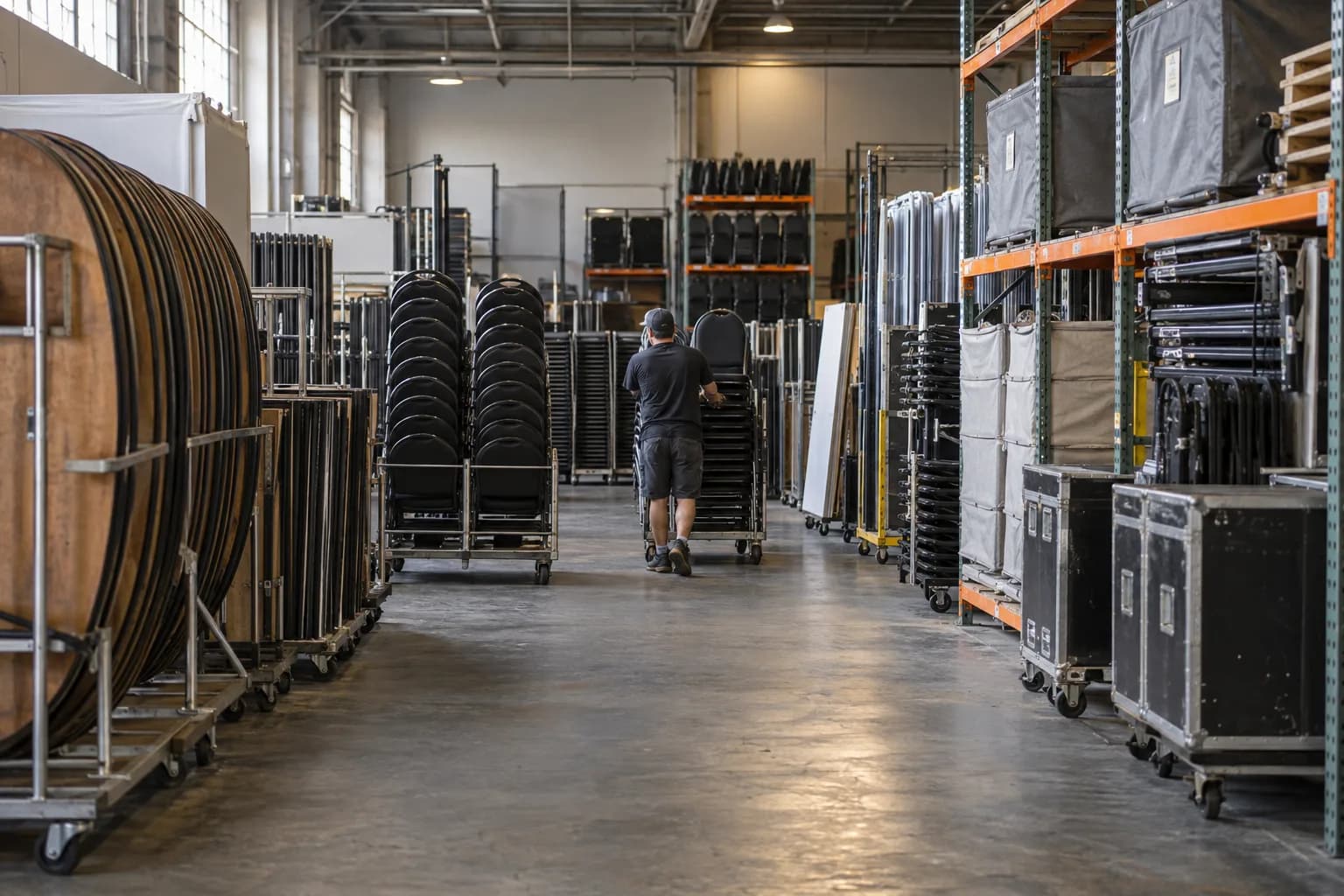
A zone answers which end of the building to walk to; the position is the aisle and shelf once you get there. A row reads ZONE A · AISLE 3, SHELF B, which is a set of directions rather than a code to decipher.

04

Counting that survives the warehouse

The floor counts and a manager accepts. The count screen is built for one hand, bad light and gloves - large controls, plain states, and no step that needs a keyboard. Accepting the count writes the adjustments; nothing changes until somebody with the authority says so.

QUESTIONS

Before you
start.

By counting what is on the shelf and letting the system account for the rest. It already knows what is at events, what is in maintenance and what was written off, so the floor only has to report the number actually in front of them. The figures reconcile from there.

Total owned, serviceable, reserved, at events, on shelf, in maintenance, and missing. They are derived from the same underlying records rather than typed in separately, which is what stops two screens showing different numbers for the same item on the same morning.

Only if you give them that capability, and it is deliberately separate from everything else they need. Moving units between pools, editing where something is stored and submitting a count are one permission; changing the total the company owns is another. The floor observes, the office decides.

A storage zone plus a position - which end of the building to walk to, then the aisle and shelf once you are there. A row reads as directions rather than as a code somebody has to remember the key to.

Every change to a quantity writes its own adjustment row in the same database transaction as the change itself. There is no separate log to remember to update, and no screen anywhere that can move stock without leaving a record of who moved it and when.

BLOG

How the work is done.

All posts

See it against your own stock

Load what you rent, in the quantities you have, and check a date. That is the whole first session.

Start free