

How to stop double-booking your rental equipment
Double-booking is a record-keeping problem, not a discipline problem. Here is why availability spreadsheets fail, and the four rules that stop the same stock being promised twice.
Event Managr is event rental business management software for inventory, bookings, availability, customers and warehouse operations. What you own, what is promised, and what came back - in one record the office and the warehouse both read.
● From $29 a month. 14-day free trial. No card required.
Seating · Zone A · Aisle 3, Shelf B
Linens · Zone B · Rack 4
Structures · Zone D · Bay 2
Expired holds have released their stock. Confirming one re-checks availability.
Warehouse team changed Chiavari chair · RETURN · damagedQty: 2 → 4
Two frames bent on return.
2026-09-14 09:24
Operations manager changed White linen 120in · STOCK_COUNT · totalQty: 94 → 96
Accepted floor count.
2026-09-14 08:11
Warehouse team changed Gold ceremony arch · PLACEMENT · position: Bay 1 → Bay 2
2026-09-13 16:42
The same views used inside the Event Managr workspace.
Nobody sets out to run a rental company on three systems. It happens because each one worked at the size you were then. The problem is not that the spreadsheet is bad - it is that the stock keeps moving while the file sits still.
It knows what somebody typed after the last event. It does not know that four of those chairs came back broken on Sunday.
Availability lives in whoever answers fastest. Two people promise the same marquee and both are certain they checked.
The count that matters is on a page in the warehouse, and the person quoting is in the office with the other version.
Ten steps, in the order they happen. Every one is a moment where a rental business either knows what it has or guesses.
A customer asks for 300 chairs on the 14th. The record starts with the question, not after the deposit.
Check the dates against every other booking, including prep and cleaning days. The number you quote is the number you have.
Confirm and the stock is claimed. Nobody else can promise the same units for the same days.
The warehouse sees what leaves and when. Anything short or in maintenance shows before the van is loaded.
Stock goes out against the booking, so what left is recorded rather than remembered.
Units sit as out at events - not on the shelf, not missing, and not available to anyone else.
The booking tells you what is due back and on which day, in one list rather than five WhatsApp threads.
Count it in. This is the only moment the truth about your inventory changes, so it is a workflow, not an afterthought.
Damaged, in maintenance, missing, or straight back to serviceable. Each move writes an adjustment beside the number.
Cleaned, repaired, counted, and back in availability - in time for the booking that already wanted it.
When a customer asks for 300 chairs on the 14th, Event Managr checks every booking, prep day, cleaning day, damaged unit, missing unit, and item in maintenance. You see what can actually leave the warehouse, not the number someone last typed into a spreadsheet.
Availability is calculated fresh from the bookings that create it, so the answer stays tied to the work.
See how bookings and availability work →Reserve counts of stock across date ranges, with the turnaround each item needs between events.
Bulk quantities, seven reconciling figures, and an adjustment history beside every number.
What leaves today, what is due back, what needs attention - on a phone, in bad light, with gloves on.
The conversation, the history, and who is allowed to change what.
It is the system a rental company runs on: one record of the stock you own, the bookings that claim it, the condition it comes back in, and the customers on the other end. It differs from general event management software, which organises the event, and from retail inventory software, which assumes stock is sold rather than returned.
Event decoration, planning and party rental businesses that manage reusable stock - chairs, linens, tents, decor, equipment - along with the bookings that move it and the people who keep both going.
From the bookings themselves, every time it is asked for. Owned units minus what is out at events, minus what is damaged or in maintenance, minus what is inside a turnaround window. Nothing is stored, so nothing can drift away from the commitments that produced it.
No. It is built around bulk-quantity rental: forty chairs are forty interchangeable units, not forty asset records. That is how the stock is actually handled, moved and lost.
Yes. The stock-count flow is designed for a phone on the floor - large controls, clear states, no step that needs a keyboard. The floor counts and a manager accepts, so nothing changes until someone with the authority says so.
That is the usual starting point. Load the stock you actually rent in the quantities you actually have, and add bookings from there. Your data stays yours: it is a normal database, and nothing about the way it is stored is designed to make leaving difficult.
Three plans, all paid: $29 a month for a solo operator, $79 for a small team, and $199 for unlimited staff and stock. Every account starts with a 14-day free trial of the whole product, and no card is required to begin one.
Inventory and warehouse records, booking availability, customer records, access control and audit history, quotes, invoices, receipts and payments, logistics and dispatch, and event planning — run sheets for the day, crew rostering that refuses to put one person in two places at once, and the design spec for what goes where — and procurement, from a purchase order to signing for the delivery, are all live. Reference photos on a design spec, the supplier bills that finish procurement, and reporting beyond the rollups on the reports screen are not built yet, and are not sold as though they were.
Double-booking is a record-keeping problem, not a discipline problem. Here is why availability spreadsheets fail, and the four rules that stop the same stock being promised twice.
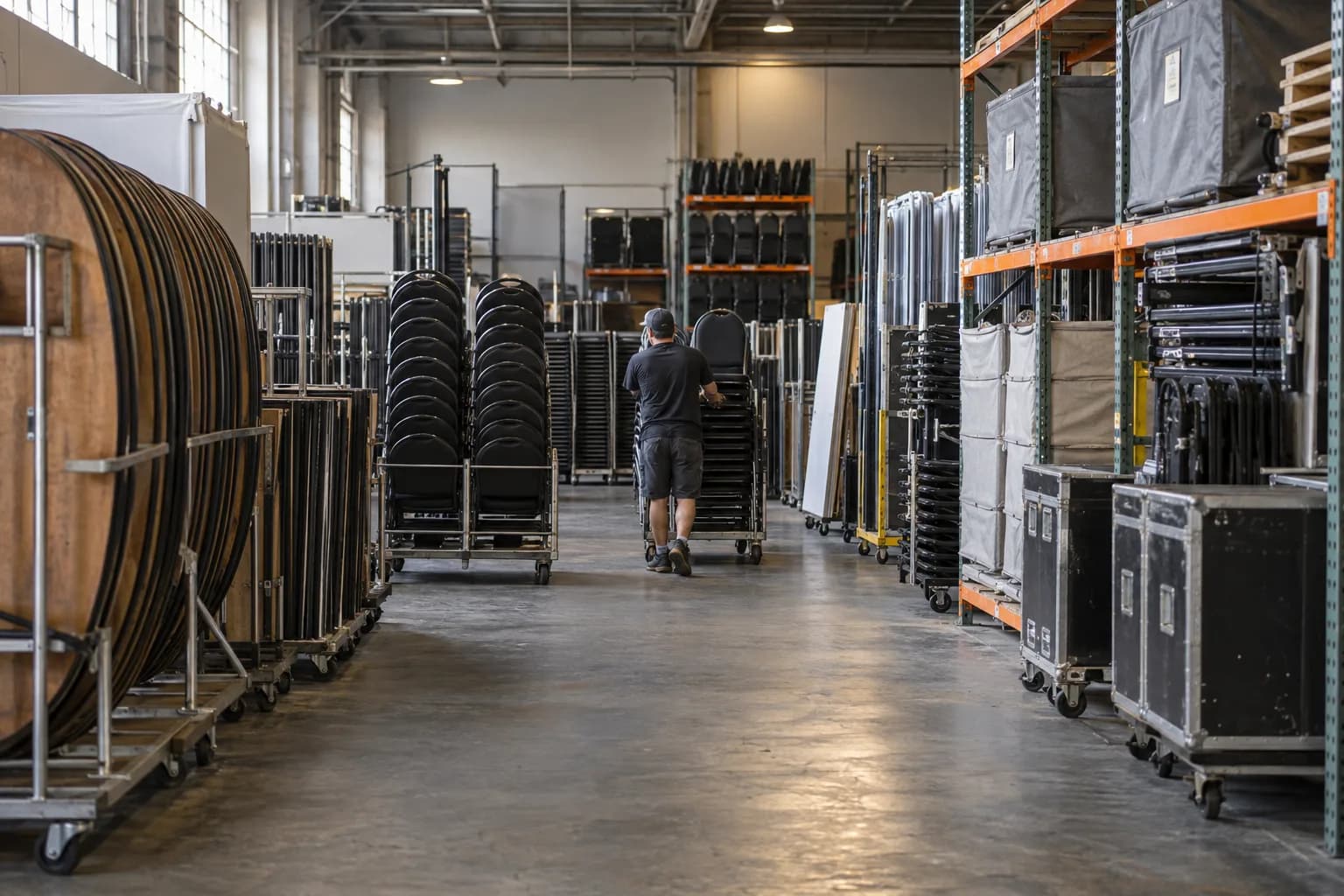
Zones, positions, staging areas and a counting routine that survives a busy weekend. A practical layout guide for event and party rental warehouses.
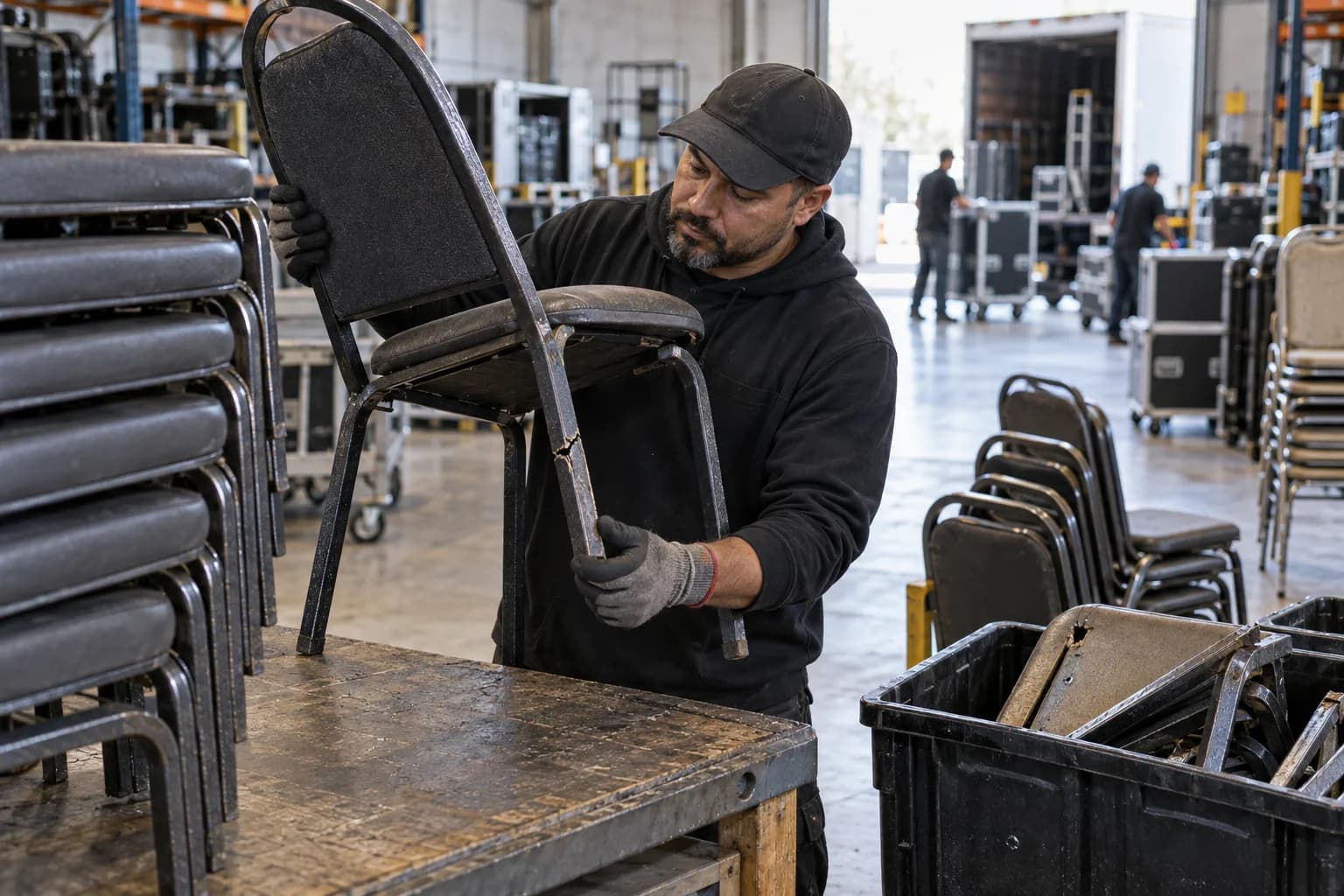
Damaged, in maintenance, missing and retired are four different things. Keeping them apart is what turns loss from a mystery into a number you can act on.
See how Event Managr fits your bookings, stock and warehouse, or start your 14-day trial now.
Start free