
Inventory and warehouse
Bulk-quantity stock with maintenance, damaged and missing as real pools, storage zones, low-stock thresholds, and a stock-count cycle where the floor counts and a manager accepts.
EVENT RENTAL ERP
Inventory, bookings, customers and staff permissions are usually four tools that do not speak. In a rental business they are the same conversation: this customer, this stock, these dates, this person checking it back in.
● 14-day free trial. No card required.
Bulk-quantity stock with maintenance, damaged and missing as real pools, storage zones, low-stock thresholds, and a stock-count cycle where the floor counts and a manager accepts.
Reserve stock across date ranges with per-item turnaround. Availability is derived from the bookings every time it is asked for, never stored, so it cannot drift away from the commitments that produced it.
Contacts, addresses, a customer type, a logged interaction timeline alongside the automatic booking events, and duplicate detection with archive and merge for the records that inevitably get entered twice.
An editable role built from a catalogue of individual capabilities, staff records, and an access-change audit trail. Permissions are enforced on the server on every action - a hidden button is a convenience, never the thing standing between someone and your data.
QUESTIONS
That the stock, the bookings, the customers and the money are one record rather than four that have to be reconciled. A booking knows which units it holds; those units know what condition they came back in; the invoice knows which booking it is for; and the audit trail runs underneath all of it.
Inventory and warehouse, bookings and availability, customer records, logistics and dispatch, access control and staff records, the billing chain from quote to invoice to receipt with payments against it, and procurement - vendors, purchase orders and receiving. Reporting covers the rollups on the reports screen.
Event planning is built - run sheets for what happens on the day, crew rostering that refuses to put one person in two places at once across events, runs and leave, and the design spec for what goes where per area. Procurement is built too, from a purchase order to signing for the delivery. Reference photos on a design spec are not, nor are the supplier bills that would finish procurement. Neither is anything that emails your customers on a schedule - there is no mailer here, so overdue invoices and renewals are surfaced in the app where somebody can act on them rather than promised as a notification that would never arrive.
Roles are built from individual capabilities rather than chosen from a fixed list, so a bookkeeper can be given the money without the stock and a driver the dispatch board without the cost prices. Every check runs on the server on every action, and changes to who holds what are themselves recorded.
Yes. The whole workspace exports from the settings section - inventory, bookings, customers, staff and the finance ledger - and money comes out in major units so an accountant is not reading every figure off by a factor of a hundred.
WHO USES IT
BLOG
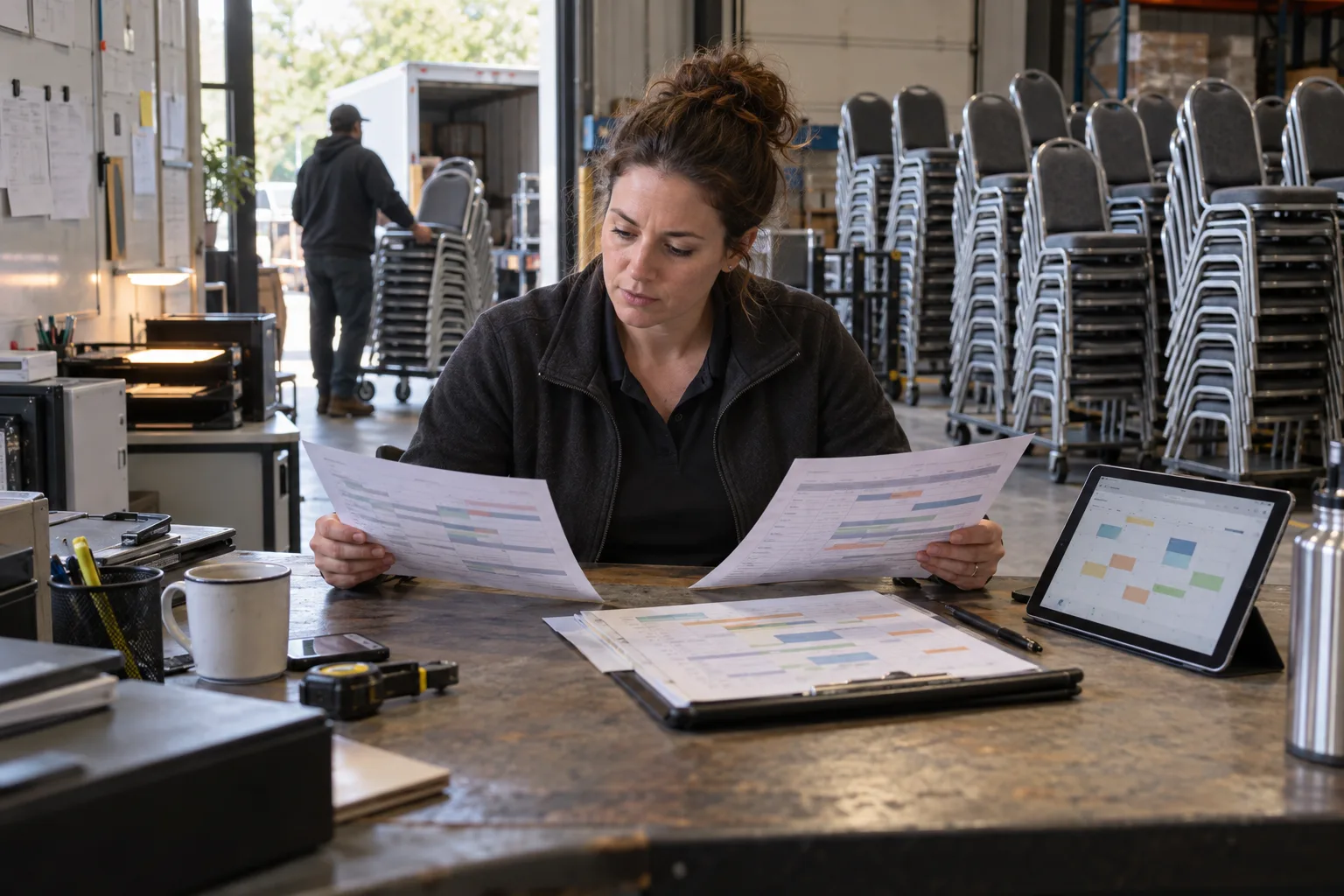
Double-booking is a record-keeping problem, not a discipline problem. Here is why availability spreadsheets fail, and the four rules that stop the same stock being promised twice.
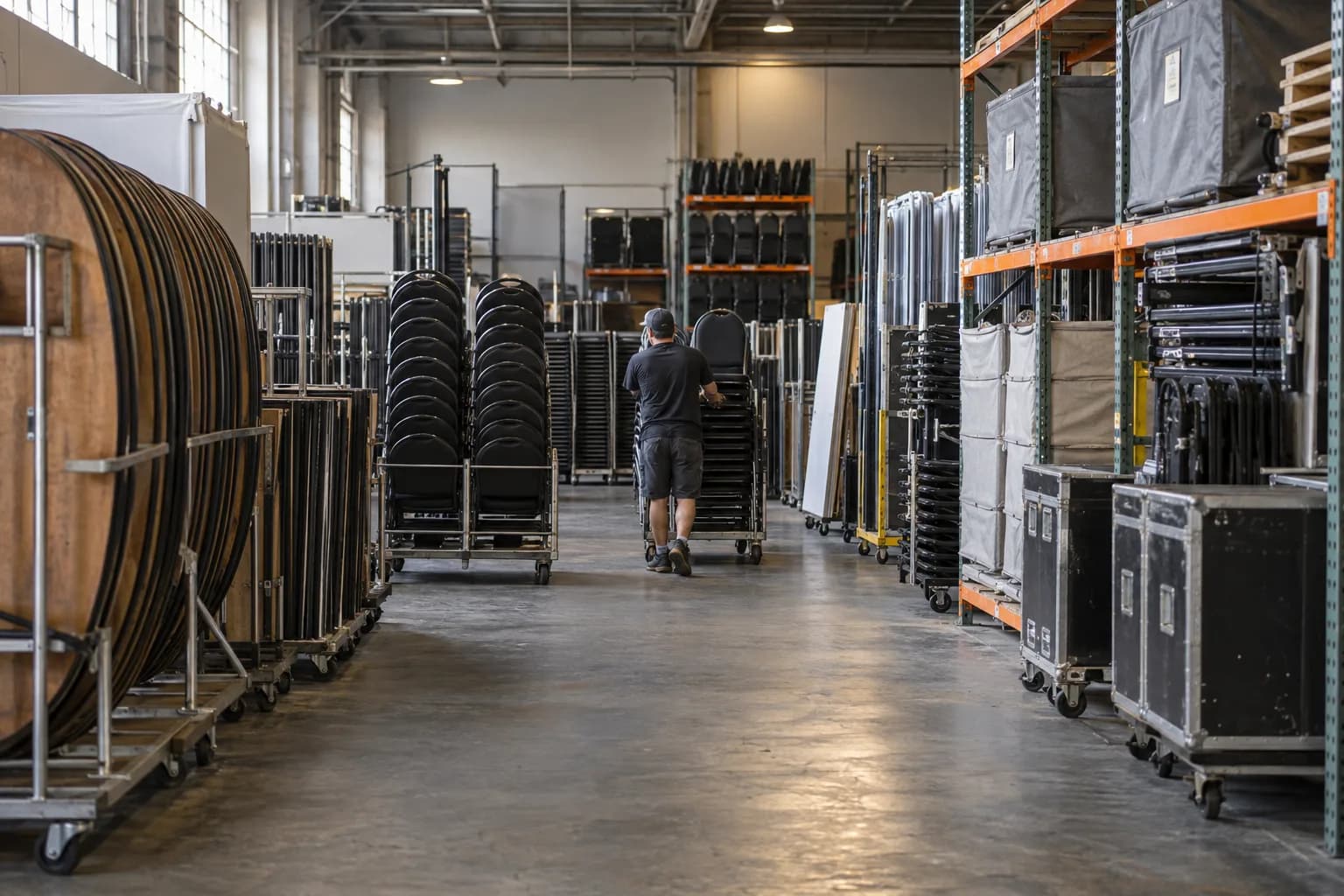
Zones, positions, staging areas and a counting routine that survives a busy weekend. A practical layout guide for event and party rental warehouses.
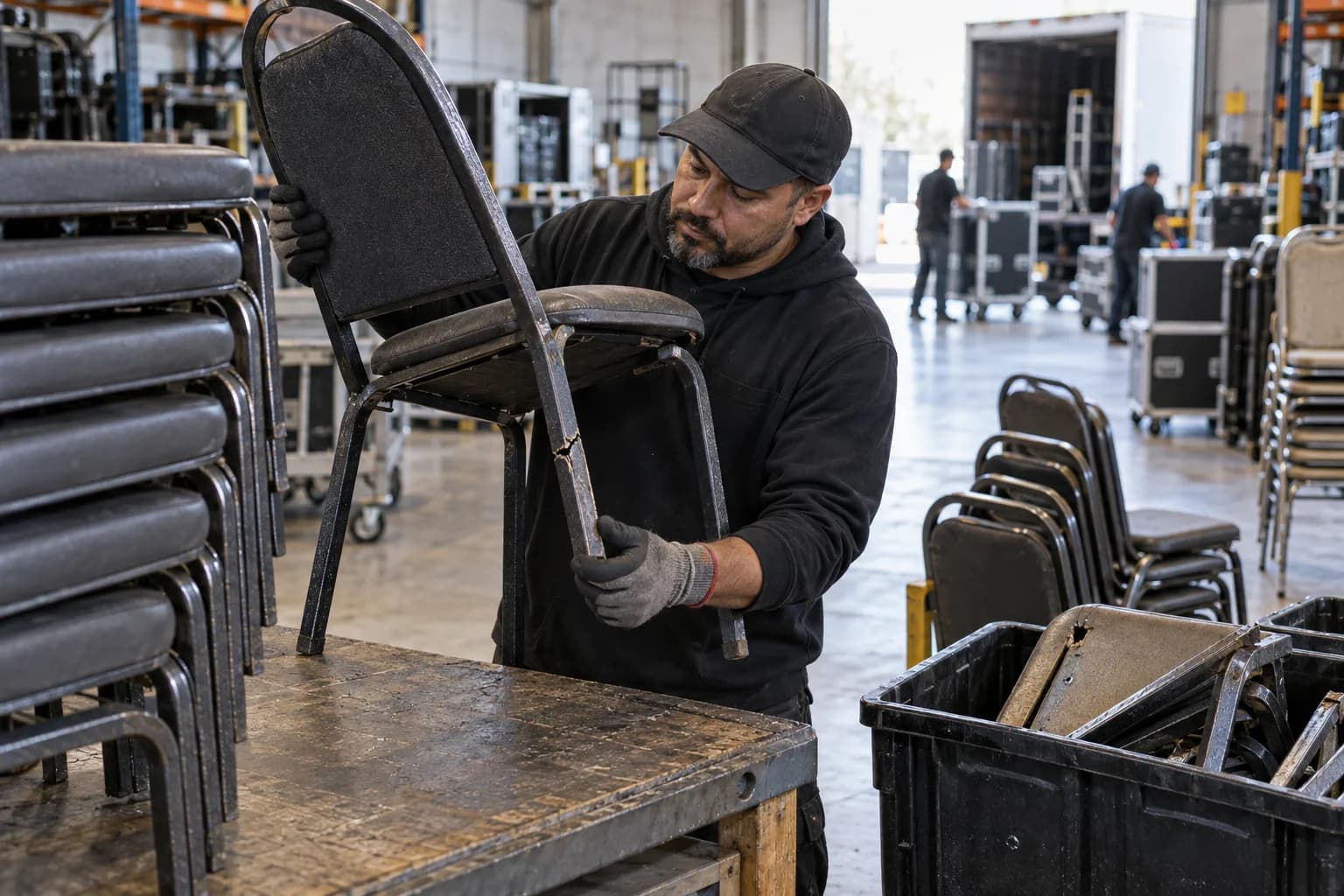
Damaged, in maintenance, missing and retired are four different things. Keeping them apart is what turns loss from a mystery into a number you can act on.
Load what you rent, in the quantities you have, and check a date. That is the whole first session.